EveryEvent NYC

Ver Todos los Events

The City That Never Sleeps

events

Concerts & Live Music
Festivals
Sports & Recreation
Food & Drink
Arts & Culture
Community
Family & Kids
Nightlife
Comedy
Theater
Destinos Populares
BaliSedonaLos AngelesCosta RicaNew YorkSan FranciscoAustinMiamiJoshua TreeTulum
Ver Todas las CategoríasVer Todos los Destinos

Explorar Todas las Características

Herramientas poderosas para hacer crecer tus eventos

Características de la Plataforma

Precios Dinámicos Inteligentes
Categorías de Entradas
Asientos Asignados
Recuperación de Carritos
Recuperación de Visitantes
Donaciones y Escala Móvil
Motor de Afiliados
Escáner de Entradas
Códigos de Cupón
Preguntas Personalizadas
Compartir Entradas
Ventas Adicionales
Análisis e Informes
Secuencias de Email
Lista de Espera / Notificar / Recordar
Explorar
Discovery HubArtists & PerformersVenuesKnowledge Base
Ver Todas las CaracterísticasSobre Nosotros
PreciosBlog
Ver Todos los Eventos

events

Concerts & Live MusicFestivalsSports & RecreationFood & DrinkArts & CultureCommunityFamily & KidsNightlife

Destinos Populares

BaliSedonaLos AngelesCosta RicaNew YorkSan Francisco

Explorar

Discovery HubArtists & PerformersVenuesKnowledge Base

Características de la Plataforma

Precios Dinámicos InteligentesCategorías de EntradasAsientos AsignadosRecuperación de CarritosRecuperación de VisitantesDonaciones y Escala MóvilMotor de AfiliadosEscáner de EntradasCódigos de CupónPreguntas PersonalizadasCompartir EntradasVentas AdicionalesAnálisis e InformesSecuencias de EmailLista de Espera / Notificar / Recordar
Ver Todas las CaracterísticasSobre Nosotros
PreciosBlog
Iniciar sesiónRegistrarseOrganizadores de Eventos
  • Browse All Events
  • Concerts & Live Music
  • Festivals
  • Sports & Recreation
  • Food & Drink
  • Arts & Culture
  • Community
  • Family & Kids
  • Nightlife
  • Todas las Categorías →
  • Brooklyn
  • Queens
  • Bronx
  • Manhattan
  • Staten Island
  • Philadelphia
  • Newark
  • Boston
  • White Plains
  • Stamford
  • All Destinations →
  • For Promoters
  • For Artists
  • For Venues
  • For Festivals
  • For Event Spaces
  • For Nonprofits
  • For Bloggers
  • For Speakers
  • Brand Ambassador
  • Case Studies
  • Red de +350K Compradores
  • Recuperación de Carritos
  • Precios Dinámicos Inteligentes
  • Categorías de Entradas
  • Eventos Recurrentes
  • Asientos Asignados
  • Motor de Afiliados
  • Lista de Espera / Notificar
  • Escáner de Entradas
  • Widget Embebido
  • Event Syndication
  • Message Center
  • Integrations
  • Reports
  • Todas las Características →
  • Acerca de
  • The Ecosystem
  • Blog
  • Glosario
  • Inspiration
  • Centro de Ayuda
  • Contacto
  • Documentación API
  • Recursos de Marca
  • Carreras
  • Prensa
  • Términos de Servicio
  • Política de Privacidad

Events

  • Browse All Events
  • Concerts & Live Music
  • Festivals
  • Sports & Recreation
  • Food & Drink
  • Arts & Culture
  • Community
  • Family & Kids
  • Nightlife
  • Todas las Categorías →

Getaways

  • Brooklyn
  • Queens
  • Bronx
  • Manhattan
  • Staten Island
  • Philadelphia
  • Newark
  • Boston
  • White Plains
  • Stamford
  • All Destinations →

For Organizers

  • For Promoters
  • For Artists
  • For Venues
  • For Festivals
  • For Event Spaces
  • For Nonprofits
  • For Bloggers
  • For Speakers
  • Brand Ambassador
  • Case Studies

Características

  • Red de +350K Compradores
  • Recuperación de Carritos
  • Precios Dinámicos Inteligentes
  • Categorías de Entradas
  • Eventos Recurrentes
  • Asientos Asignados
  • Motor de Afiliados
  • Lista de Espera / Notificar
  • Escáner de Entradas
  • Widget Embebido
  • Event Syndication
  • Message Center
  • Integrations
  • Reports
  • Todas las Características →

Empresa

  • Acerca de
  • The Ecosystem
  • Blog
  • Glosario
  • Inspiration
  • Centro de Ayuda
  • Contacto
  • Documentación API
  • Recursos de Marca
  • Carreras
  • Prensa
  • Términos de Servicio
  • Política de Privacidad
EveryEvent
© 2026 EveryEvent New York City. Todos los derechos reservados.
Inspiration

Self-Grasping and OfferingCompassion Through Chanting

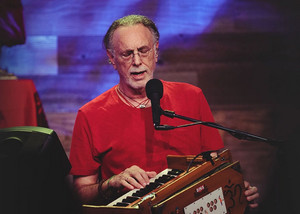
Krishna Das
Krishna Das
May 26, 2026
8 min read
Watch · 8

TLDR: In this conversation, Krishna Das and Nina Rao discuss how spiritual practice can trap us in self-grasping—the subtle program of constantly organizing life around making the self feel good—and how chanting, dedicated practice, and intentional loving-kindness prayers offer a way to short-circuit that ego-centered approach. By learning to wish well-being for all beings (bodhicitta), rather than only for ourselves, we recognize the fundamental oneness underlying existence and become instruments for alleviating suffering in the world.

Read · 6 sections

What Is Self-Grasping and How Does Spiritual Practice Trap Us In It?

Krishna Das begins with a striking observation: many people approach spiritual practice thinking they are doing it primarily for themselves. They want to alleviate their own suffering, find peace of mind, and develop an open heart. This seems reasonable on the surface, but Krishna Das points out a subtle trap. When we organize our practice around the goal of making ourselves feel better, we are reinforcing what he calls "self-grasping"—a term he attributes to Rinpoche.

Self-grasping is the underlying program that runs beneath nearly all human activity. It is the pervasive tendency to organize our entire lives around the question: How can I make me feel good and avoid feeling bad? Krishna Das explains that we are not born with this orientation by accident. Our parents, themselves unaware of alternatives, taught us to prioritize our own comfort and preferences. This becomes the default operating system, so deeply embedded that most people never question it.

The problem deepens when we realize that self-grasping feeds itself. The more we organize life around protecting and pleasing the self, the more we engage in constant comparison and evaluation. We judge ourselves against others—I'm better, I'm worse, they have more, I have less. This comparative mind generates suffering and egoistic clinging that "just gets worse and worse and goes on and on." Even spiritual practice, if aimed only at personal peace, can become another weapon in the self-grasping arsenal.

How Does Dedicating Merit to All Beings Interrupt the Self-Centered Loop?

The key intervention Krishna Das offers is the practice of dedicating and offering the merit of our practice to all beings. This is not merely a nice gesture or a spiritual accessory added after the "real work" is done. Instead, it directly short-circuits the self-centered version of life that "almost everybody is involved with all the time."

The logic is both simple and profound. When we finish our chanting, prayers, or any spiritual practice, instead of keeping the fruits for ourselves, we consciously offer them outward. This gesture is not abstract—it is a deliberate rewiring of the heart-mind. By consistently directing our gratitude, energy, and compassion toward others, we weaken the grip of self-grasping and begin to cultivate what the Buddhist traditions call bodhicitta: the intention and aspiration that all beings be free from suffering and experience well-being.

Yet Krishna Das also acknowledges a practical truth: we do start from a self-centered place. Even traditional prayers like the Hanuman Chalisa or prayers to the goddess begin with us asking for something for ourselves. This is not a failure; it is the starting point. The fact that we are even asking—that we understand something can be done about our state of mind—is already "quite an extraordinary thing," since most people suffer with "no letup or no reason." What matters is that we don't stay stuck there. We use our own self-interest as a doorway into compassion for others.

What Is the Connection Between Personal Healing and Recognizing Oneness?

Nina Rao introduces a key insight: personal egoistic suffering cannot be fully relieved until we recognize a deeper truth. As Krishna Das agrees, "there's only one of us." This is not a poetic metaphor but the central teaching of all the great wisdom traditions. They may describe it in different language and offer different practices to recognize it, but they converge on this insight: we are all cells of one being.

This perspective matters not because it is comforting in a sentimental way, but because it reveals the futility of self-grasping. If there is truly only one of us, then harming or neglecting another being is ultimately a harm to ourselves, and uplifting another is uplifting ourselves. Krishna Das notes that even if we do not yet know how to reach this direct experience of oneness, we can hold the perspective intellectually and let it inform our practice.

The path to embodying this recognition is both intimate and practical. By learning to take care of our own hearts—to understand our own pain, to soften our defenses—we become more sensitive to what others are going through. This tenderness becomes the bridge between the personal and the universal. When we chant mantras like Sita Ram or Om Namah Shivaya, these are not just tools for accessing altered states; they are technologies for opening the heart into "that space of connectedness," allowing us to enter into the lived experience of oneness.

How Does Metta (Loving-Kindness) Practice Differ From Chanting?

Nina Rao makes a distinction between two approaches to cultivating compassion: the more spontaneous opening of the heart through chanting and mantra, and the more intentional, verbally-structured practice of metta (loving-kindness meditation). She mentions that Krishna Das encouraged her to do a metta loving-kindness retreat, and that she has now incorporated this intentional form into the songs she and Krishna Das recorded together, including "Lokah Samastah Sukhino Bhavantu" for her album "Bhumi Devi."

In metta practice, we use phrases to directly wish well-being for specific beings and categories of beings. This is different from the flow of chanting, where the mantra itself carries the blessing. As Nina notes, this intentionality matters. Krishna Das adds that loving-kindness was never taught to him as an adult, and he did not fully understand it until later. The reason it feels unfamiliar is that "it's not natural in this world for us to wish other people well." We are raised in a competitive framework where we believe "happiness was in a limited quantity, and if somebody else has it, we think there's less for us." But this belief is backward. The truth is the opposite: compassion and spiritual attainment spread like a disease—one catches them from those who have them, and they ultimately cure us of our unhappiness.

How Do Kirtans Themselves Become Acts of Collective Merit-Offering?

Krishna Das has begun closing his kirtans with the chant "Lokah Samastah Sukhino Bhavantu" (May all beings everywhere be happy and free), using it as a formal recognition that we are all in this together. This simple act—ending a communal singing session with an explicit offering for all beings—transforms the whole gathering. It reframes the kirtan from something people do together in a room into a purposeful gesture toward the whole world.

Krishna Das explains the stakes: "We're all in this little blue speck in the cosmos. And there's nowhere we can go. So, we better clean up our rooms and get it together." The implication is clear. The chaos and violence outside in the world are real and pressing, but we cannot let them destroy our hearts. If they do, we become useless. Instead, we must tend to our inner worlds, develop our capacity for compassion, and offer that capacity in ever-widening circles. This is not escapism; it is radical pragmatism. By taking care of our own hearts and working to open them, we become agents of healing in the world.

The alleviation of suffering in the world is "a long-term project. Many lifetimes." Yet the people engaged in it—those attracted to chanting, to dharma practice, to the cultivation of compassion—have been "doing this for a long time." The very fact that we are interested now suggests we have been preparing across many lifetimes for this work.

Where to Go From Here

If you recognize self-grasping in your own practice, the intervention is straightforward: dedicate the merit. Whether you chant, meditate, pray, or study, consciously offer the fruits to all beings. Begin with loving-kindness phrases if that resonates with you: may I be happy; may my family be happy; may my teachers, my adversaries, all beings everywhere be happy and free. Notice how the heart shifts when you make this intentional turn outward. Over time, the boundary between self and other softens. The competitive scarcity mindset weakens. You may begin to taste, even briefly, the perspective Krishna Das describes—the recognition that there is only one of us. This recognition is not something to achieve in the future; it is already here, waiting to be noticed. Every chant, every compassionate thought, every offering is a step toward the freedom and well-being of all.

Transcript

[0:05] [music]

[0:14] [music]

[0:18] [singing]

[0:25] [music]

[0:28] >> Hello.

[0:29] Hi.

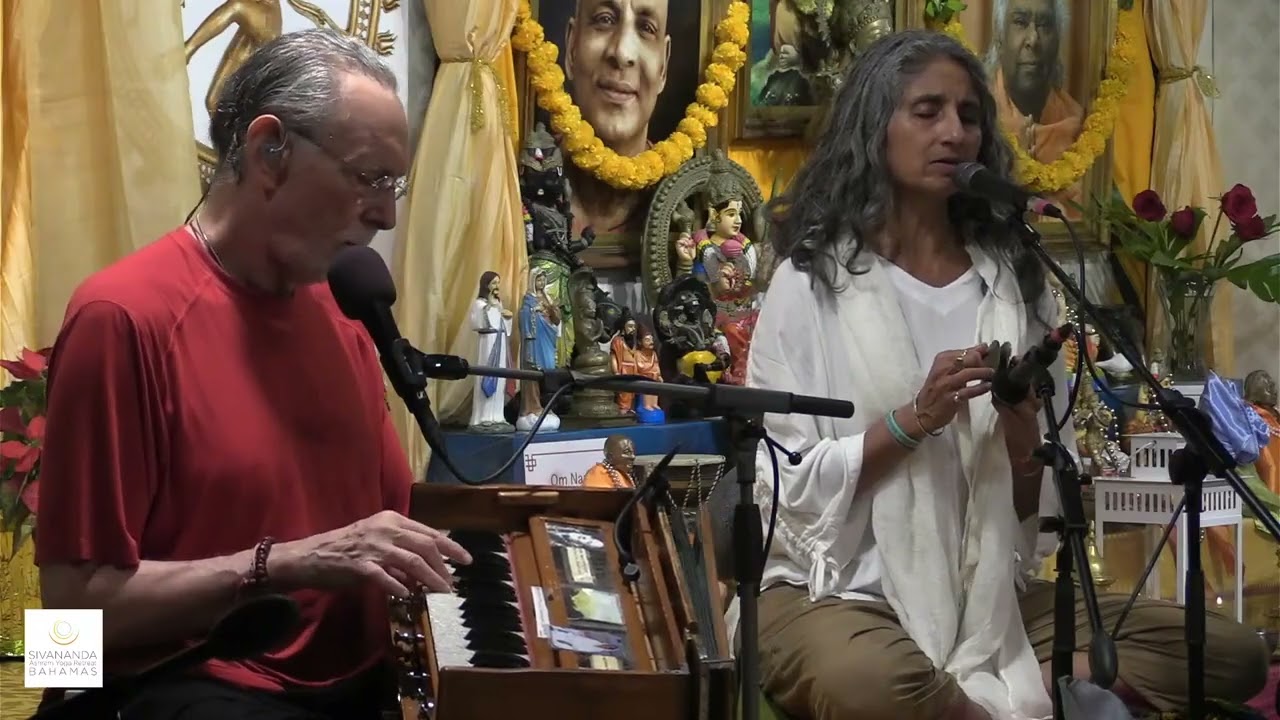
[0:31] Krishna Das and I are in Encinitas

[0:34] and we've just finished chanting

[0:37] in benefit for Tara Mandala.

[0:41] And we're about to

[0:44] part ways for the next

[0:46] 36 hours.

[0:48] >> [clears throat]

[0:48] [laughter]

[0:48] >> If we can bear it.

[0:51] Until we meet again.

[0:53] >> [snorts]

[0:53] >> And [clears throat] um I just wanted to

[0:56] share a little bit of our

[0:58] thoughts about

[1:01] offering compassion

[1:05] wishing for Bodhicitta. How do we

[1:08] cultivate loving-kindness and where

[1:11] does chanting fit into that?

[1:14] So, this is what I'm asking Krishna Das.

[1:17] Oh, you're asking me. I am because you

[1:19] know, you're And the chant master. You

[1:21] forgot.

[1:22] >> I forgot. Yeah, okay.

[1:24] Uh

[1:25] well, you know.

[1:28] >> [clears throat]

[1:29] >> I think a lot of us

[1:31] uh

[1:31] have the feeling that we do

[1:33] if we're doing spiritual practice, that

[1:35] we're doing it

[1:37] for ourselves.

[1:39] And

[1:40] and to alleviate our own suffering and

[1:43] find some

[1:44] peace of mind and some openness of

[1:47] heart, a way to live in the world in a

[1:48] good way.

[1:50] But

[1:52] in some ways, that's actually

[1:54] self-defeating.

[1:56] Because the subtle program underneath

[1:58] that is a me program.

[2:01] This is me me me. This is most important

[2:04] how I feel.

[2:06] >> [clears throat]

[2:08] >> And we begin to see how all of our lives

[2:10] are

[2:12] organized around trying to make me feel

[2:14] good and not feel bad. This is what

[2:17] Rinpoche calls self-grasping. Yeah.

[2:19] Yeah, that's what they call self

[2:21] self-grasping.

[2:22] >> Yeah.

[2:23] So

[2:24] and it seems reasonable that we should

[2:27] do things like that, but the problem is

[2:29] that

[2:30] we begin to see that until

[2:33] our [clears throat] hearts

[2:34] truly get as wide as the world

[2:38] and

[2:40] we begin to judge other people less

[2:43] and evaluate ourselves

[2:46] by comparing ourselves to other people.

[2:49] I'm better, I'm worse, I need this, they

[2:51] have more, I have less, this kind of

[2:53] stuff.

[2:54] And then the suffering and and the

[2:56] egoistic

[2:57] clinging just gets worse and worse and

[3:00] goes on and on.

[3:02] So the [snorts] idea of dedicating and

[3:04] offering the merit or the the juice from

[3:06] our practice

[3:10] to all beings starts to short-circuit

[3:12] that self-centered

[3:14] Mhm. version of our lives which almost

[3:17] everybody is involved with all the time.

[3:21] And it's natural because that's what we

[3:23] were taught.

[3:25] My parents weren't bad people, but they

[3:27] didn't know things.

[3:29] >> Yeah. Their parents didn't know.

[3:31] But somehow or other

[3:34] because of some incredibly extraordinary

[3:37] karmic

[3:39] situations we've become aware of

[3:42] that there are practices to do

[3:45] that can help us

[3:48] and others live in this world in a good

[3:49] way, regardless of what's going on out

[3:52] there.

[3:53] Cuz that's a real key thing. We can't

[3:55] let our hearts be destroyed

[3:57] by the chaos and violence and

[4:00] viciousness of what's going on outside

[4:02] of us.

[4:03] Cuz if we do, then we're not good for

[4:05] anything. And we're not

[4:06] >> we're still starting from a place,

[4:08] though, of needing to help ourselves

[4:10] first.

[4:10] >> Absolutely. Yeah. Yeah, of course we

[4:12] are. So, like all our prayers that we

[4:14] [clears throat] do, like even Hanuman

[4:16] Chalisa or prayers to the goddess, we're

[4:19] asking for something for ourselves. We

[4:22] start there, right?

[4:23] >> Yeah. But then there's also a form of

[4:26] prayer where you can offer

[4:28] this for all beings. Yeah.

[4:31] Yeah. But it's even even the the fact

[4:34] that we're asking for ourselves

[4:36] is quite an extraordinary thing because

[4:39] most people in this world don't have the

[4:42] understanding that anything can be done

[4:44] about our state of mind.

[4:45] >> Mhm.

[4:46] And they go on suffering

[4:50] with no letup or no reason. And it's

[4:54] truly

[4:55] uh

[4:56] heartbreaking. Right.

[4:58] So, if we can find a way to alleviate

[5:01] our own internal suffering, if we have

[5:03] to start there,

[5:05] possibly it'll also help others.

[5:07] Yeah, but I think you know,

[5:10] even our own personal egoistic suffering

[5:13] can't be

[5:15] fully relieved until

[5:17] we recognize that there's only one of

[5:18] us.

[5:19] >> True.

[5:20] And uh

[5:22] That's what all That's what all the

[5:23] great Right.

[5:25] traditions say.

[5:27] One. Right. They They define it maybe

[5:30] differently, and they see it maybe

[5:31] differently, and the practices

[5:35] to recognize that may be different, but

[5:38] in the end, there's only one of us.

[5:39] We're all the cells of one being.

[5:42] So, it's important to have that

[5:44] perspective. Even even you don't know

[5:46] how to reach it, it's in there.

[5:48] >> we can't know how to reach it from here.

[5:49] It's It's not easy like that.

[5:51] >> Yeah.

[5:52] >> [clears throat]

[5:53] >> But, by learning to take care of

[5:55] ourselves and our own hearts, Yeah. we

[5:58] we become more sensitive to what other

[6:00] people are going through.

[6:01] >> Mhm.

[6:03] And so, when we're chanting Sita Ram or

[6:05] Om Namah Shivaya,

[6:07] all these mantras are to open up our

[6:09] heart into that space

[6:12] of connectedness.

[6:13] >> us enter into that space of oneness.

[6:15] Yeah.

[6:17] But, you know, recently on Home in the

[6:19] Heart, you recorded Lokah Samastah

[6:22] Sukhino Bhavantu.

[6:24] And then, um

[6:28] uh we've also just recorded this for my

[6:31] album that's coming out together.

[6:33] Krishna is singing with me.

[6:35] And I see this as a

[6:37] un-

[6:39] a slightly different kind of practice.

[6:41] It's more intentional in offering

[6:43] really offering like when

[6:45] you know, you suggested to me long ago

[6:48] to go and do a metta loving-kindness

[6:50] retreat. I had never done anything like

[6:52] that before.

[6:53] Where there's intentional phrasing for

[6:55] [clears throat] wishing someone else.

[6:57] >> Yeah. Yeah.

[6:58] I never understood this until uh as an

[7:01] adult. It was never taught to me like

[7:03] that.

[7:03] >> Mhm.

[7:04] Yeah. So. It's uh It's not an In some

[7:08] ways, it's not

[7:10] natural

[7:11] in this world for us to

[7:15] to wish other people well.

[7:17] We're in competition with them.

[7:20] Uh

[7:21] It's as if happiness was in a limited

[7:23] quantity, and if somebody else has it,

[7:25] we think there's less for us.

[7:28] But, it's actually exactly the opposite.

[7:30] Right.

[7:30] Yeah.

[7:33] Yeah, we we get we we

[7:37] Dharma is

[7:38] is a a disease that's transmitted. Uh we

[7:42] catch it from those who have it. And it

[7:45] ultimately cures us of our

[7:48] our

[7:49] our unhappiness. Mhm. And it helps us

[7:52] live in a better way.

[7:55] And I I also do that prayer at the end

[7:57] of the kirtans now.

[7:59] >> Yes, you do. As a way of

[8:01] uh

[8:02] >> [clears throat]

[8:03] >> just recognizing that we're all in this

[8:05] together. We're all in this little blue

[8:08] speck

[8:09] in the cosmos. And there's nowhere we

[8:11] can go. So, we better clean up our rooms

[8:14] and get it together.

[8:16] Mhm.

[8:18] And ultimately

[8:20] this [clears throat] is a step in the

[8:21] direction of alleviating the suffering

[8:24] in the whole world. Yeah.

[8:26] Yeah. Yeah.

[8:28] Which is a a long-term

[8:31] project. Many lifetimes.

[8:34] Yeah.

[8:35] And we've been all doing this for a long

[8:37] time.

[8:38] Or we wouldn't be interested in it now.

[8:40] Mhm.

[8:42] Yeah.

[8:44] Okay.

[8:46] Lokah

[8:49] Samastah

[8:51] It's your melody. Okay, you sing your

[8:53] melody. No, no, that's okay. I can't

[8:55] even remember my melody. I'll do the

[8:56] harmony here.

[8:57] >> [laughter]

[8:58] >> Sukhino

[9:00] Bhavantu

[9:03] Lokah

[9:05] Samastah

[9:10] Sukhino

[9:12] Bhavantu

[9:15] Ram Ram. Ram Ram. Take care. Shri Ma

[9:17] [music]

[9:18] Jaya Ma

[9:20] Bhumi

[9:22] Devi [music] Shri Ma

[9:25] Jaya Ma

[9:27] Bhumi Devi

[9:29] >> [music]

Krishna Das
AuthorKrishna Das

American kirtan singer, devotee of Neem Karoli Baba, often called "Yoga's rock star." His chanting of the Name has filled rooms, stadiums, and concert halls for over forty years. A…

View profileWebsite
Explore Topics
Self-graspingBodhicittaLoving-kindnessChanting-practiceDharma

Got Questions?

Frequently Asked Questions

Self-grasping is the underlying program that organizes life around making the self feel good and avoiding pain. When spiritual practice is aimed only at personal peace, it reinforces this ego-centered loop rather than dissolving it. Krishna Das teaches that dedicating practice's merit to all beings is the antidote, as it interrupts the constant self-referential evaluation that perpetuates suffering.
You can use intentional phrases like 'May I be happy; may all beings everywhere be happy and free.' After chanting, meditation, or any spiritual practice, explicitly dedicate the benefit to all beings rather than keeping it for yourself. This conscious redirection of compassion weakens the competitive mindset and opens the heart to interconnection.
No—it is the natural starting point. Krishna Das acknowledges that we all begin from self-interest and ask for things for ourselves. What matters is that we don't stay stuck there. By starting with our own healing, we become sensitive to others' suffering, and we can then offer the fruits of our practice to all beings.
All wisdom traditions teach that beneath the illusion of separate selves, there is a fundamental unity—we are all cells of one being. This is not just philosophy; recognizing it transforms how we relate to others. If there is truly only one of us, harming another is self-harm, and helping another is self-help. Chanting and contemplative practice are ways to move toward direct experience of this truth.
We are conditioned from childhood to believe happiness is scarce—if someone else has it, there's less for us. This competitive mindset runs deep. However, compassion actually spreads like a disease, curing unhappiness rather than diminishing it. Intentional loving-kindness practice retrains the mind to recognize that another's well-being is our well-being.
Mantras like 'Sita Ram' or 'Om Namah Shivaya' are designed to open the heart into the space of connectedness and oneness. Unlike metta, which uses verbal intention, chanting works through vibration and repetition. The mantra itself carries the blessing and draws us into direct experience of the unity beneath apparent separation.
By closing communal chanting sessions with this prayer—'May all beings everywhere be happy and free'—the kirtan transforms from a private experience into a collective offering to the world. It reminds participants that they are not isolated individuals but cells in one interconnected whole, and that their practice has real consequences for alleviating suffering everywhere.

Continue Reading

More from Krishna

View All
First Meeting with a Living Guru: Recognition and Transformation
Featured

First Meeting with a Living Guru: Recognition and Transformation

Krishna Das reflects on his first encounters with his teacher Maharaj-ji and Ram Dass, describing the moment he recognized something real ab…

1 min read
Thursday Night Satsang: Kirtan, Love, and Meeting the Divine
Featured

Thursday Night Satsang: Kirtan, Love, and Meeting the Divine

A two-hour kirtan and teaching session celebrating spiritual community, losing yourself in love, and the practice of chanting the divine nam…

1 min read
Expectations in Chanting: How to Return Home Through the Holy Names
Featured

Expectations in Chanting: How to Return Home Through the Holy Names

Krishna Das explains how expectations block spiritual practice and how chanting the holy names is about coming home to what already is, not …

1 min read
Thursday Night Satsang and Kirtan: Chanting, Community, and Sacred Practice
Featured

Thursday Night Satsang and Kirtan: Chanting, Community, and Sacred Practice

Krishna Das leads a live satsang kirtan in NYC, blending devotional chanting with teachings on mortality, sacred geography, and the transfor…

1 min read

Keep exploring

Continue your journey

More wisdom and gatherings from across the BrightStar directory.

More Articles

Browse the full library of teachings, interviews, and guides.

Back to all articles →

Teachers & Artists

Explore the lineages, musicians, and guides of the conscious world.

Explore artists →

Find an Event

Kirtan, retreats, sound baths, breathwork, festivals — happening soon.

Browse events →
Read more from BrightStarCreate Free Account
Host your own gatherings?Try the Demo