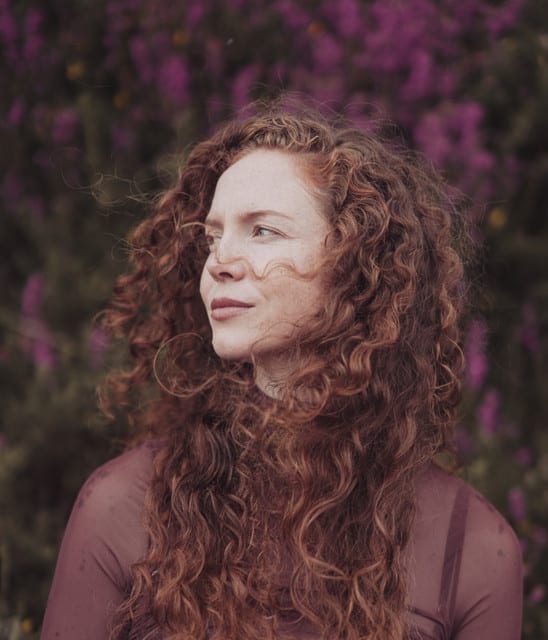

Para la Tierra is a single, released on April 22, 2025, with one track on it. A single asks for a different kind of attention than an album does. There is no sequence to follow and no arc across sides, only one piece of music and the time you give it. This guide is built around that.
Ajeet began with mantra. Sacred Waters (2013) holds music for Kundalini Yoga meditations, and At The Temple Door (2014) weaves songs and mantras over Todd Boston's guitar, with harmonies from Snatam Kaur. From there her path widened: Darshan (2015), recorded in Bali; Haseya (2016); Shuniya and Indigo Sea (2018); the LUNAR EP (2020); the live Voices Like Rain; and Let It Breathe (2022). Along the way she moved back to Ireland in 2020 and began working from her home studio.
Para la Tierra arrives from that later, rooted place. It also later became part of Slánú, the album she released in October 2026, whose song list includes Para la Tierra alongside Healing Song, Viento and Para Sanar. Hearing it as a single in 2025 means hearing it before the larger record gathered around it.
The track is credited to Ajeet with MARIAAMBIWASI, and its lyric, printed on her website, includes a long passage of prayer for the earth in Spanish. Beyond that, listen for what Ajeet's music reliably offers. Her sound draws on the folk traditions of her Irish background and moves toward mystical, meditative soundscapes. On her live album Voices Like Rain, that meant layered harmonies, acoustic and electric guitars, hand percussion and Celtic harp. Her band brings together musicians from Spain, Ireland and the United States, and a Spanish title sits naturally within that circle.
Listen for how the piece breathes: whether the voice leads or sits inside the texture, whether the harmonies stack or stay close to a single line, and how patiently the pacing unfolds. Those choices are where her music tends to say the most.
"Para la Tierra." The title, Spanish for "for the earth," is itself a statement of intent. It frames the song as an offering rather than a performance. Ajeet loves story, especially the stories cultures pass down, and many of her songs carry folklore, dream images and myth. Listen for how the song sets its own small world: whether it feels like a prayer, a lullaby or an invocation. The single format lets that one idea stand alone, with nothing competing for your attention.
If you want companions after it, the Slánú track list offers Viento and Para Sanar, which share the Spanish-language thread. Treat them as an invitation to explore further rather than as part of this release.
Ajeet's genres are world music and devotional. Her early albums were mantra-centered, and she has worked with Snatam Kaur, a prominent Kundalini yoga mantra singer. Yet her music has never stayed inside one container. It sits where devotional song meets Irish folk and meditative soundscape, closer to a sung offering than to a concert piece.
Para la Tierra continues that blend. It belongs to the devotional world through intention and to the folk world through its storytelling instinct, and it doesn't need a stricter label than that. Her work also reaches beyond the recordings: she leads retreats, including the Dreaming Retreat at Dromgarriff in County Cork, where yoga, meditation, songs and stories come together. The single makes sense as a small piece of that wider practice.
This single suits a listener who comes to music for settling rather than stimulation. If you have followed Ajeet from the mantra albums and want to hear where she is now, it is a short, direct way in. It also suits someone newer to her work who wants a low-commitment first listen before moving to Slánú.
It will matter most in a life moment that calls for grounding: a season of change, a stretch of grief or tiredness, or a time when you want to feel connected to something larger and quieter than your calendar. The earth-facing title makes it a natural companion for anyone returning to a place, a body or a rhythm after time away.
Give it one full, undistracted pass first. Evening is ideal, with the lights low and your phone out of reach. Headphones will help you hear the layering of voices and the small details under the voice.
Then try it a second way. Play it outdoors, or while sitting on the floor, or at the start of a meditation or yoga practice. Since the song is titled for the earth, it rewards being heard close to the ground, literally or in spirit.
Finally, let the silence after the last note run for a minute before you move on. With a single, that pause is part of the piece.
If it lands for you, follow it to Slánú and hear how it sits among the other songs there.