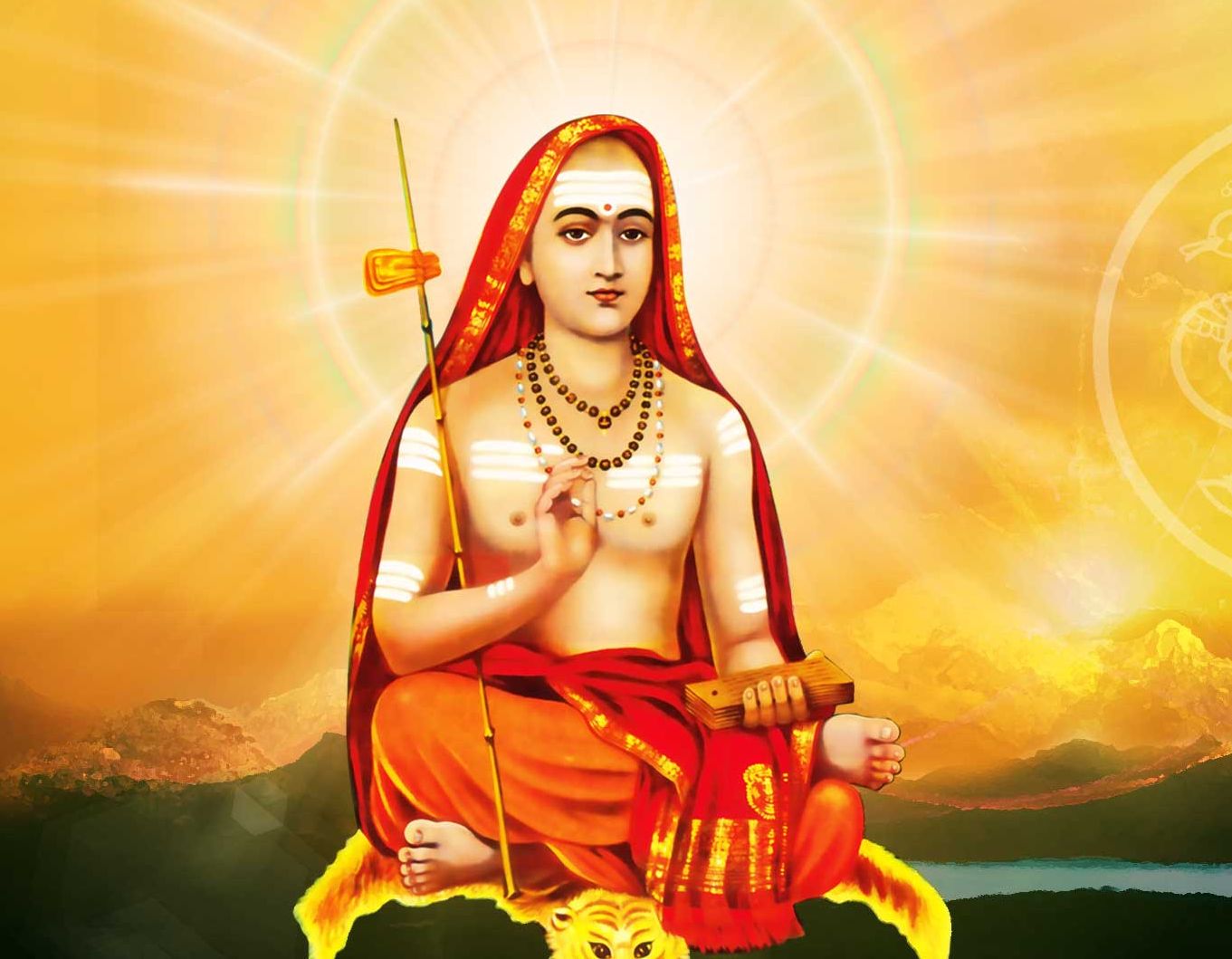
The Illusion of Separation: Embracing Non-Duality
In the profound words of Adi Shankara, "Brahman alone is real; the world is unreal; the individual self is none other than Brahman." This statement encapsulates the essence of non-duality, urging us to recognize the singular reality of Brahman while acknowledging the illusory nature of the world around us. The stakes are high: understanding this truth can lead to liberation from the cycles of suffering and attachment that bind us to a transient existence.
Shankara's assertion invites us to explore the depths of our own identity and the nature of reality itself. It challenges us to look beyond the surface of our experiences and perceptions, urging a deeper inquiry into what it means to be truly alive. In a world rife with distractions and illusions, this teaching serves as a beacon, guiding us toward a more profound understanding of our interconnectedness with the universe and the divine essence that permeates all existence.
The image / the metaphor
At the heart of Shankara's quote lies a striking metaphor that juxtaposes the eternal and the ephemeral. The term "Brahman" refers to the ultimate reality, the unchanging, infinite source from which all things arise. In contrast, the "world" is described as "unreal," suggesting that our everyday experiences, while vivid and compelling, are ultimately transient and deceptive. The imagery evokes a sense of awakening, as if we are being called to peel back the layers of illusion that obscure our true nature.
Diving deeper into this metaphor, we can see that the individual self, or "Atman," is not separate from Brahman but is, in fact, a manifestation of it. This realization invites us to reconsider our understanding of identity and existence. Rather than viewing ourselves as isolated beings navigating a chaotic world, we are encouraged to recognize our inherent unity with the divine. This shift in perception can be transformative, allowing us to experience life from a place of wholeness rather than fragmentation.
In the speaker's tradition
Adi Shankara's teachings are rooted in the Vedantic tradition, which emphasizes the non-dual nature of reality. Central to this philosophy is the concept of "Advaita," or non-duality, which posits that there is no fundamental separation between the individual self and the ultimate reality. This understanding aligns with the principles of "dharma," which guide us toward living in harmony with the universe, and "prajna," the wisdom that arises from direct experience of our true nature.
In the context of Shankara's work, we can draw parallels to the Buddhist concept of "sunyata," or emptiness, which similarly points to the illusory nature of phenomena. Both traditions invite practitioners to transcend dualistic thinking and recognize the interconnectedness of all things. The "Brahmajnanavalimala," from which this quote is drawn, serves as a profound exploration of these themes, offering insights into the nature of reality and the path to liberation through self-realization.
Living the teaching
Consider a modern scenario where this teaching might resonate: a person grappling with feelings of isolation and disconnection in a fast-paced, technology-driven world. In moments of stress or anxiety, it can be easy to feel as though we are separate from others, trapped in our own individual experiences. By reflecting on Shankara's words, this individual might begin to see that their feelings of separation are rooted in the illusion of the world, prompting a shift in perspective that fosters connection and compassion toward themselves and others.
In a different context, imagine a relationship strained by misunderstandings and conflict. By applying the teaching of non-duality, both partners can begin to recognize that their individual selves are not in opposition but are expressions of the same underlying reality. This awareness can lead to deeper empathy and a willingness to engage in open dialogue, ultimately transforming the relationship into a space of mutual growth and understanding. In daily practices such as meditation or mindfulness, the recognition of our shared essence can cultivate a profound sense of peace and belonging.
A reflection
As we contemplate Shankara's profound assertion, we are invited to ask ourselves: In what ways do I perceive separation in my life, and how might embracing the truth of non-duality transform my experience? This question encourages us to explore the boundaries we create between ourselves and others, as well as the illusions that keep us from recognizing our inherent unity with all that is. By engaging with this inquiry, we open ourselves to the possibility of deeper connection, understanding, and ultimately, liberation.






Join the BrightStar Community
Stay connected with daily inspiration, event announcements, and community wisdom