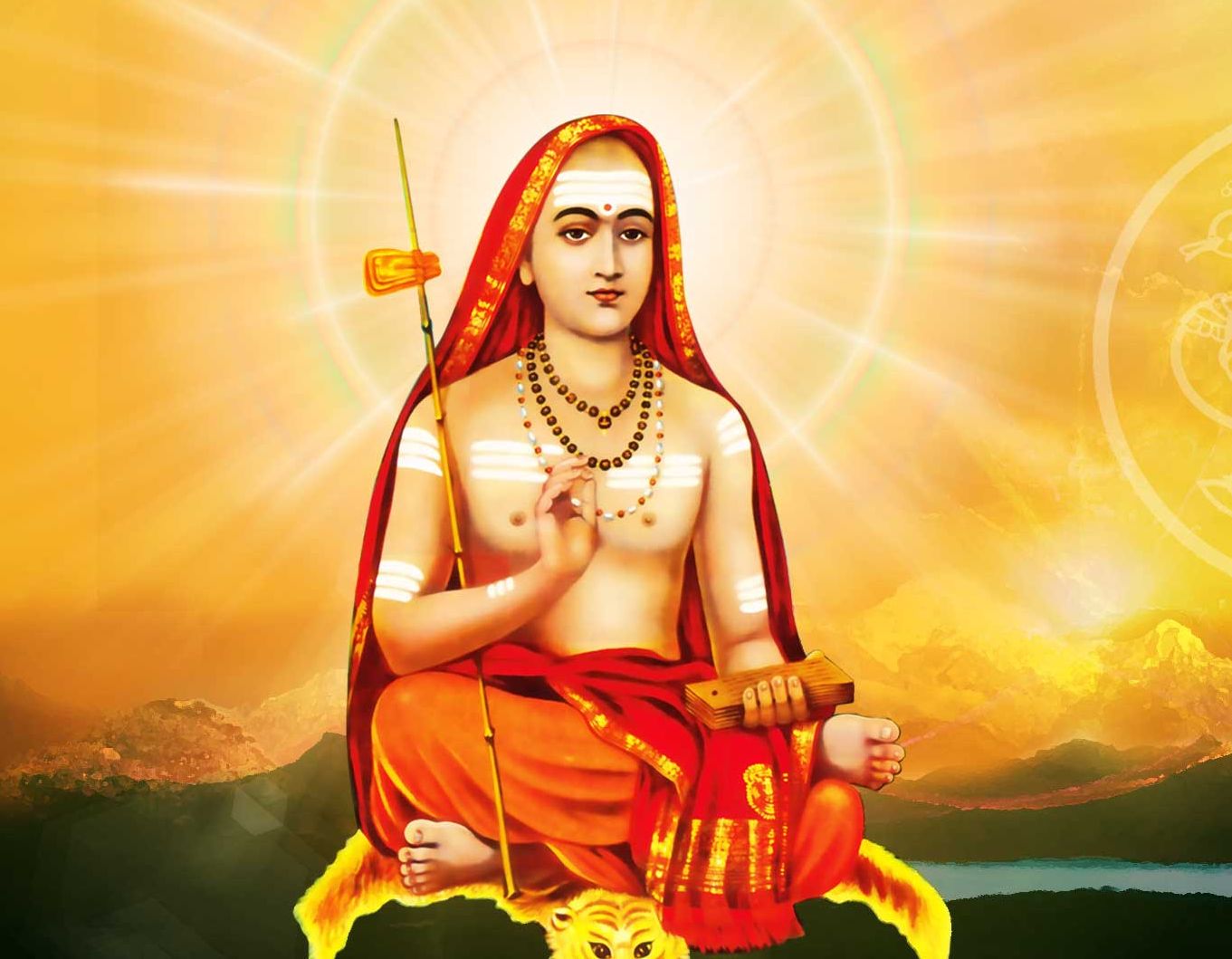
The Inner Journey: Liberation Through Self-Reflection
Adi Shankara's profound assertion, "To turn them inward is the way of liberation," invites us to reconsider the direction of our attention. In a world often preoccupied with external stimuli, this quote serves as a gentle yet firm reminder that true freedom lies not in the pursuit of external validation or sensory pleasures but in the exploration of our inner landscape. The stakes are high; our liberation hinges on our ability to redirect our senses and thoughts inward, fostering a deeper understanding of our true selves.
In this age of distraction, where the cacophony of the outside world often drowns out our inner voice, Shankara's wisdom resonates with a timeless urgency. The act of turning inward is not merely a passive retreat but an active engagement with our consciousness. It challenges us to confront our fears, desires, and attachments, ultimately leading us toward a state of liberation that transcends the ephemeral nature of worldly experiences. This inward journey is essential for anyone seeking a deeper connection with themselves and the universe.
The image / the metaphor
The imagery in Shankara's quote evokes a powerful metaphor of directionality. The phrase "turn them inward" suggests a deliberate choice to redirect our senses—those gateways to the world—away from the external and toward the internal. This act of turning is not just a physical movement; it symbolizes a profound shift in focus, a conscious decision to engage with our inner thoughts and feelings rather than being swept away by the currents of external distractions. The verb "turn" implies agency, indicating that liberation is not a passive state but an active pursuit.
In the speaker's tradition
Adi Shankara, a pivotal figure in the Advaita Vedanta tradition, emphasizes the importance of self-inquiry and the realization of non-duality. His teachings often revolve around concepts such as *Brahman* (the ultimate reality) and *Atman* (the individual self), asserting that the distinction between the two is an illusion. In this context, turning our senses inward aligns with the practice of *jnana yoga*, the path of knowledge, where understanding the self leads to liberation. This inward focus is essential for discerning the true nature of reality, which is often obscured by our attachments to the external world.
In the *Vivekachudamani*, a seminal text attributed to Shankara, the process of self-inquiry is laid out as a means to achieve *moksha*, or liberation. The text encourages practitioners to discern the real from the unreal, urging them to look beyond the transient nature of sensory experiences. This aligns with the broader Vedantic principle of *neti neti* (not this, not that), which invites seekers to strip away layers of identification with the external world to uncover the true self. Shankara's teachings remind us that liberation is not found in external pursuits but in the profound understanding of our own consciousness.
Living the teaching
Consider a modern scenario where this teaching can be applied: a busy professional overwhelmed by the demands of work and life. Each day, the individual is bombarded with emails, meetings, and social obligations, leaving little room for introspection. In this context, turning inward might involve setting aside time for meditation or journaling, allowing the individual to process their thoughts and feelings. This practice not only fosters self-awareness but also cultivates a sense of peace amidst the chaos, illustrating how liberation can emerge from a simple act of turning one's attention inward.
Another application of this teaching can be found in relationships, particularly during conflicts. When faced with a disagreement, the instinct may be to react defensively or to focus on the external circumstances. However, by turning inward, one can reflect on their own feelings, motivations, and fears. This introspection can lead to a more compassionate understanding of oneself and the other person, ultimately transforming the conflict into an opportunity for growth and deeper connection. In both scenarios, the act of turning inward serves as a catalyst for liberation, enabling individuals to navigate their lives with greater clarity and purpose.
A reflection
As we contemplate Shankara's profound insight, we are invited to ask ourselves: What would it mean for me to turn my senses inward? This question encourages a deep exploration of our own habits, distractions, and attachments. By reflecting on this inquiry, we can begin to uncover the layers of our consciousness, leading us toward a more liberated existence. In this journey of self-discovery, may we find the courage to embrace the inward path, recognizing that true freedom lies not in the external world but within our own hearts and minds.






Join the BrightStar Community
Stay connected with daily inspiration, event announcements, and community wisdom