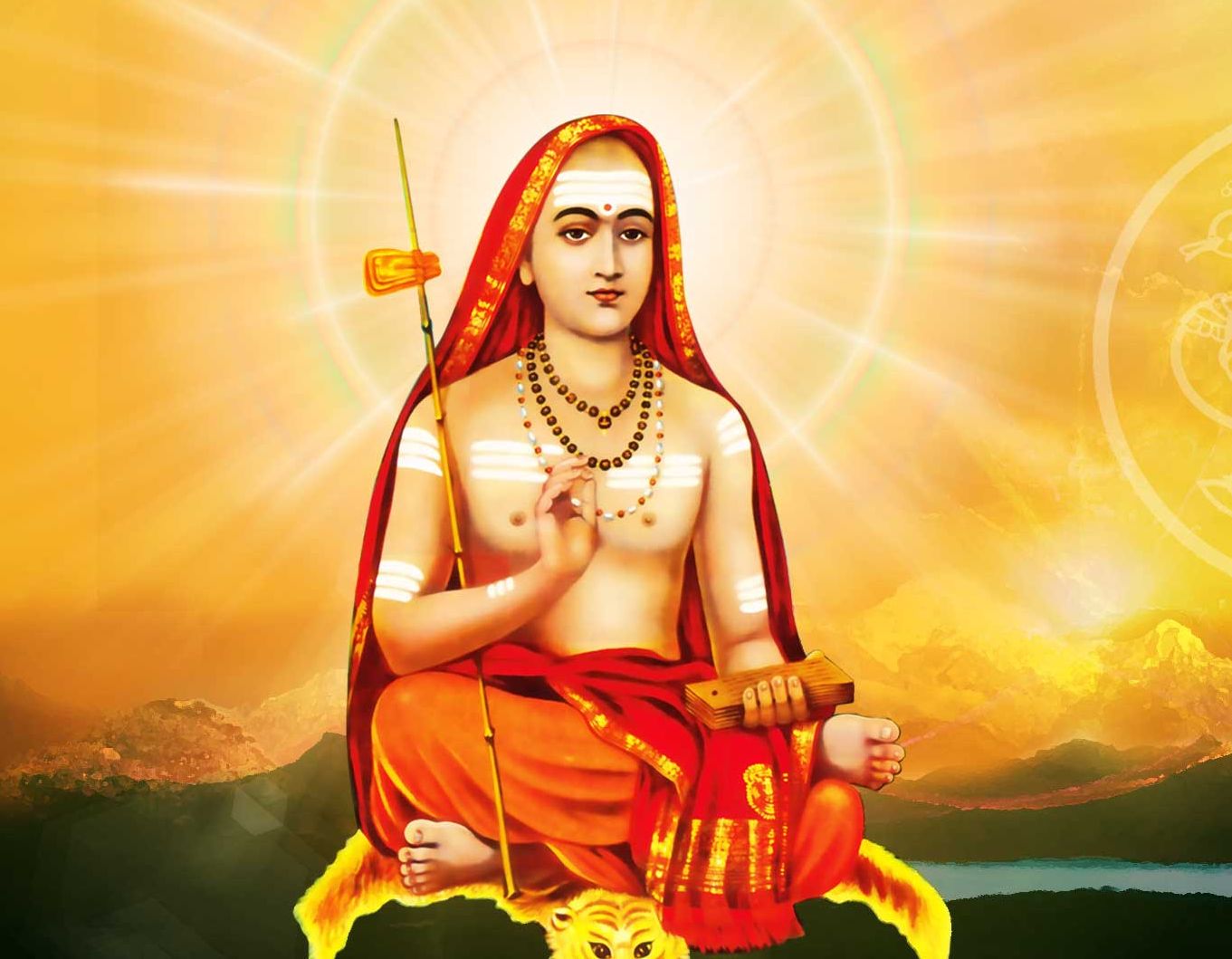
The Mind as Both Prison and Key
Adi Shankara's assertion that "the mind alone is the cause of bondage and of liberation" invites us to explore the dual nature of our mental faculties. This profound statement suggests that our thoughts and perceptions can either confine us in a cycle of suffering or liberate us into a state of profound understanding and peace. The stakes are high; our mental landscape shapes our reality, influencing how we experience life and interact with the world around us.
In a world increasingly dominated by distractions and external pressures, understanding the mind's role becomes crucial. Shankara's insight serves as a reminder that the true battle for freedom lies not in external circumstances but within the confines of our own thoughts. By recognizing the mind's power, we can begin to navigate the complexities of existence with greater clarity and purpose, ultimately leading us toward liberation.
The image / the metaphor
The imagery in Shankara's quote evokes a powerful dichotomy: the mind as both a prison and a sanctuary. The term "bondage" conjures images of chains and confinement, suggesting that our thoughts can ensnare us in a web of anxiety, fear, and ignorance. Conversely, "liberation" hints at the expansive freedom that comes from transcending these mental limitations, allowing us to experience life in its fullness. The verbs "cause" and "is" emphasize the active role the mind plays in shaping our reality, underscoring that it is not merely a passive observer but a dynamic force.
Diving deeper into this metaphor, we can see that the mind's capacity for both bondage and liberation is rooted in its nature as a tool for perception. It can distort reality through attachment and aversion, leading to suffering, or it can clarify and illuminate, guiding us toward wisdom and compassion. This duality invites us to examine our thoughts critically, recognizing that they are not inherently true but rather reflections of our conditioning and beliefs. In this way, the mind becomes a canvas upon which we paint our experiences, and understanding this process is essential for true liberation.
In the speaker's tradition
Adi Shankara's teachings are deeply embedded in the Vedantic tradition, which emphasizes the importance of self-inquiry and the realization of one's true nature. Concepts such as dharma, the moral order of the universe, and prajna, or wisdom, are integral to understanding how the mind can lead us toward liberation. In Vedanta, the mind is often seen as a tool that can either obscure or reveal the underlying reality of Brahman, the ultimate truth. This perspective aligns with the idea of kenosis, or self-emptying, where one must relinquish the ego's grasp to experience the fullness of existence.
In the context of Shankara's work, particularly in the "Vivekachudamani," we find a rich exploration of the mind's role in spiritual awakening. The text emphasizes discernment (viveka) as a means to differentiate between the eternal and the ephemeral, guiding practitioners to recognize the illusory nature of the mind's attachments. This discernment is essential for breaking free from the bondage of ignorance and realizing the liberating truth of one's own divine nature.
Living the teaching
Consider a modern scenario where this teaching resonates: a person grappling with anxiety about their career. The mind, filled with worries about success and failure, creates a sense of bondage, trapping them in a cycle of self-doubt and fear. By recognizing that these thoughts are not absolute truths but rather constructs of the mind, they can begin to cultivate a sense of liberation. This shift in perspective allows them to approach their work with renewed clarity and purpose, freeing them from the chains of anxiety.
Another application of this teaching can be found in interpersonal relationships. Imagine a conflict arising from misunderstandings and assumptions. The mind, clouded by ego and attachment, can exacerbate the situation, leading to further discord. However, by applying Shankara's insight, one can choose to step back, observe their thoughts, and engage in open communication. This conscious choice to transcend the mind's limitations fosters understanding and connection, illustrating the transformative power of liberation through awareness.
A reflection
As we contemplate Shankara's profound statement, we are invited to ask ourselves: "In what ways do my thoughts create bondage in my life, and how can I cultivate a mindset that leads to liberation?" This question encourages a deep exploration of our mental habits and beliefs, prompting us to examine the narratives we construct and their impact on our experiences. By engaging with this inquiry, we can begin to unravel the complexities of the mind, ultimately guiding ourselves toward a more liberated existence.






Join the BrightStar Community
Stay connected with daily inspiration, event announcements, and community wisdom