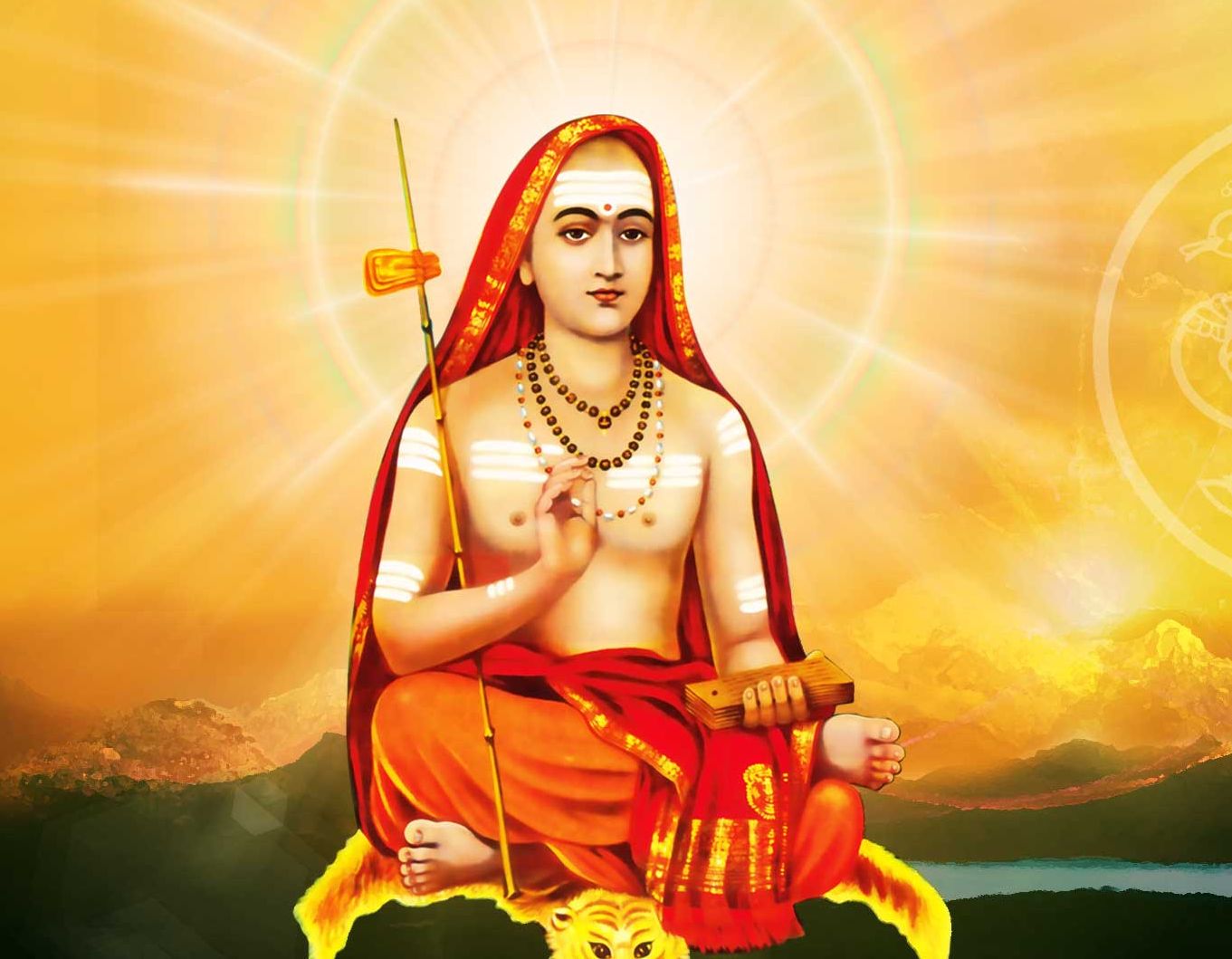
Awakening to Liberation: The Jivanmukta Experience
Adi Shankara's assertion that "Such a one is called jivanmukta — liberated while living" invites us to explore the profound nature of liberation that transcends mere theoretical understanding. This concept of jivanmukti, or living liberation, challenges the notion that enlightenment is a distant goal, achievable only after death. Instead, it posits that one can attain a state of freedom and realization while still engaged in the complexities of life. This perspective is not only transformative but also deeply relevant in our contemporary search for meaning and fulfillment.
To grasp the essence of jivanmukti, we must delve into the interplay between existence and liberation. Shankara's teachings suggest that liberation is not an escape from life but rather a full engagement with it, marked by an inner awakening to one's true nature. This understanding compels us to reconsider our relationship with the world around us, urging us to seek a deeper connection with our own consciousness while navigating the challenges of daily existence. The stakes are high; recognizing our potential for liberation while living can lead to profound shifts in how we perceive ourselves and our interactions with others.
The image / the metaphor
The term jivanmukta evokes a vivid image of a person who walks the earth yet is unbound by the chains of ignorance and suffering. The word "jivan" signifies life, while "mukta" denotes liberation, suggesting a harmonious coexistence of the two. This imagery captures the essence of a being who, despite the trials and tribulations of life, remains anchored in the realization of their true self. The verbs chosen here—"called" and "liberated"—imply a state of being that is both recognized and actualized, emphasizing that liberation is not merely a label but a lived reality.
Diving deeper into this metaphor, we can see that the jivanmukta embodies a paradox: they are fully present in the world yet detached from its transient nature. This state of being is akin to a lotus flower that blooms beautifully above the muddy waters, untouched by the muck below. The jivanmukta navigates life with grace and equanimity, embodying wisdom and compassion while remaining unaffected by the dualities of pleasure and pain. This metaphor serves as a powerful reminder that liberation is not about renunciation but rather about embracing life with a profound understanding of its impermanence.
In the speaker's tradition
Adi Shankara's teachings are rooted in the Vedantic tradition, which emphasizes the realization of the self (Atman) as identical to the ultimate reality (Brahman). This understanding is intricately linked to concepts such as dharma, the moral order of the universe, and prajna, the wisdom that arises from direct experience of truth. The jivanmukta exemplifies the ideal of living in accordance with dharma while embodying the wisdom of prajna, navigating the complexities of life with a heart attuned to the deeper truths of existence. In this way, liberation is not an abstract concept but a practical reality that informs one's actions and choices.
In the context of Shankara's work, the Vivekachudamani serves as a crucial text that elucidates the path to self-realization. It emphasizes discernment (viveka) between the eternal and the ephemeral, guiding seekers toward the understanding that true liberation lies in recognizing the illusory nature of worldly attachments. This text, along with others in the Vedantic canon, reinforces the notion that the jivanmukta is one who has transcended ignorance and lives in the light of wisdom, embodying the teachings of the sages while fully engaging in the world.
Living the teaching
Consider a modern scenario where an individual faces the pressures of a demanding job, family responsibilities, and societal expectations. In such a context, the teaching of jivanmukti can serve as a guiding light. Rather than succumbing to stress and anxiety, one can approach these challenges with a sense of inner freedom, recognizing that their true essence is not defined by external circumstances. By cultivating mindfulness and self-awareness, they can navigate their responsibilities with grace, embodying the qualities of a jivanmukta even amidst the chaos of daily life.
In relationships, the concept of jivanmukti can manifest as a profound capacity for compassion and understanding. Imagine a moment of conflict with a loved one, where emotions run high and misunderstandings abound. By embodying the principles of liberation, one can respond with patience and empathy, recognizing that the essence of both individuals transcends the immediate disagreement. This approach not only fosters deeper connections but also reflects the jivanmukta's ability to remain anchored in their true self, allowing love and understanding to guide their interactions.
A reflection
As we contemplate the essence of being a jivanmukta, we are invited to reflect on our own lives and the ways in which we might cultivate a sense of liberation while living. What attachments or beliefs might we be clinging to that prevent us from experiencing our true nature? In the spirit of Shankara's teachings, let us ask ourselves: How can I embody the qualities of a liberated being in my daily life, and what steps can I take to awaken to the freedom that is already within me?





Join the BrightStar Community
Stay connected with daily inspiration, event announcements, and community wisdom