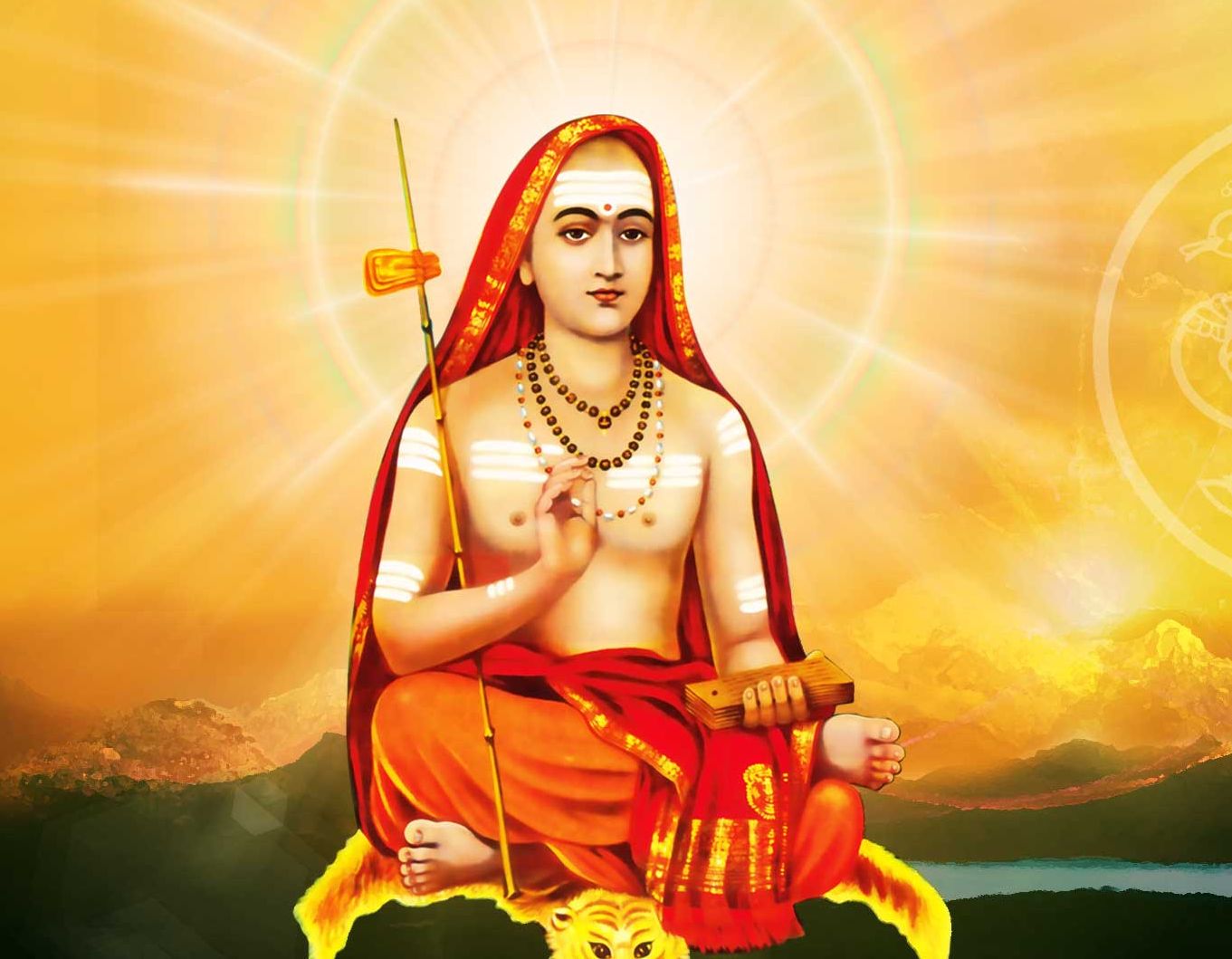
The Journey to Oneness: Understanding Liberation through Identity
Adi Shankara's profound assertion that "Liberation cannot be achieved except by the direct perception of the identity of the individual self with the Universal Self" invites us to explore the intricate relationship between our personal existence and the vast cosmos. This statement emphasizes that true liberation, or moksha, is not merely an abstract concept but a lived experience that arises from a deep realization of our interconnectedness with the universe. The stakes are high; without this understanding, we remain ensnared in the cycles of suffering and ignorance, unable to access the peace and freedom that lie within.
In a world often dominated by individualism and separation, Shankara's words resonate as a call to transcend the illusion of separateness. The journey toward liberation is not just a philosophical pursuit but a transformative process that requires us to confront our deepest fears and misconceptions about identity. By recognizing our unity with the Universal Self, we can dismantle the barriers that keep us from experiencing the fullness of existence, ultimately leading to a profound sense of peace and belonging.
The image / the metaphor
At the heart of Shankara's quote lies a rich tapestry of imagery that evokes the essence of self-realization. The term "direct perception" suggests an immediacy and clarity that transcends intellectual understanding; it is an experiential knowing that cuts through the veils of illusion. The "individual self" represents our personal identity, often shaped by societal expectations and personal narratives, while the "Universal Self" embodies the infinite, unconditioned essence that connects all beings. This juxtaposition invites us to explore the depths of our consciousness and the nature of reality itself.
Diving deeper into the metaphor, we can envision the individual self as a wave in the ocean, momentarily rising and falling, yet fundamentally composed of the same water that constitutes the vast sea. The liberation Shankara speaks of is akin to the wave realizing its true nature as water, dissolving the illusion of separateness and embracing its unity with the ocean. This realization is not merely philosophical; it is a transformative awakening that shifts our perception from isolation to interconnectedness, from fear to love.
In the speaker's tradition
Adi Shankara's teachings are rooted in the Vedantic tradition, which emphasizes the non-dual nature of reality. Central to this philosophy is the concept of Brahman, the ultimate reality that is both immanent and transcendent. The journey toward liberation involves understanding dharma, or the moral order, as well as the practice of self-inquiry (atma-vichara) to discern the true nature of the self. This process often requires a form of kenosis, or self-emptying, where one relinquishes attachments and preconceived notions to experience the fullness of existence.
In the Vivekachudamani, Shankara elaborates on the nature of the self and the importance of discernment (viveka) in realizing our true identity. He draws upon the metaphor of the rope and the snake, illustrating how ignorance can lead us to misperceive reality. Just as one must recognize the rope to dispel the illusion of the snake, so too must we perceive our unity with the Universal Self to achieve liberation. This text serves as a guide for seekers, offering insights into the nature of consciousness and the path to self-realization.
Living the teaching
Consider a modern scenario where an individual grapples with feelings of isolation and disconnection in a bustling urban environment. The pressures of daily life can create a sense of separateness, leading to anxiety and despair. By reflecting on Shankara's teaching, this person might begin to explore practices such as meditation or mindfulness, which encourage a direct perception of their thoughts and emotions. Through these practices, they can cultivate a deeper awareness of their connection to others and the world around them, gradually dissolving the barriers that contribute to their feelings of isolation.
In the context of relationships, Shankara's teaching can illuminate the dynamics of love and compassion. When faced with conflict or misunderstanding, one might recall the essence of their shared humanity, recognizing that beneath the surface differences lies a common identity. This perspective can foster empathy and understanding, allowing individuals to navigate challenges with grace and openness. By embodying the realization of their interconnectedness, they can transform their relationships into spaces of growth and mutual support, reflecting the unity that Shankara so eloquently articulates.
A reflection
As we contemplate Shankara's profound insight, we are invited to ask ourselves: In what ways do I perceive myself as separate from others and the universe? This question encourages a deep inquiry into our beliefs and assumptions about identity, prompting us to explore the layers of conditioning that may obscure our understanding of oneness. By engaging with this question, we open ourselves to the possibility of liberation, allowing the light of awareness to illuminate the path toward our true nature.






Join the BrightStar Community
Stay connected with daily inspiration, event announcements, and community wisdom