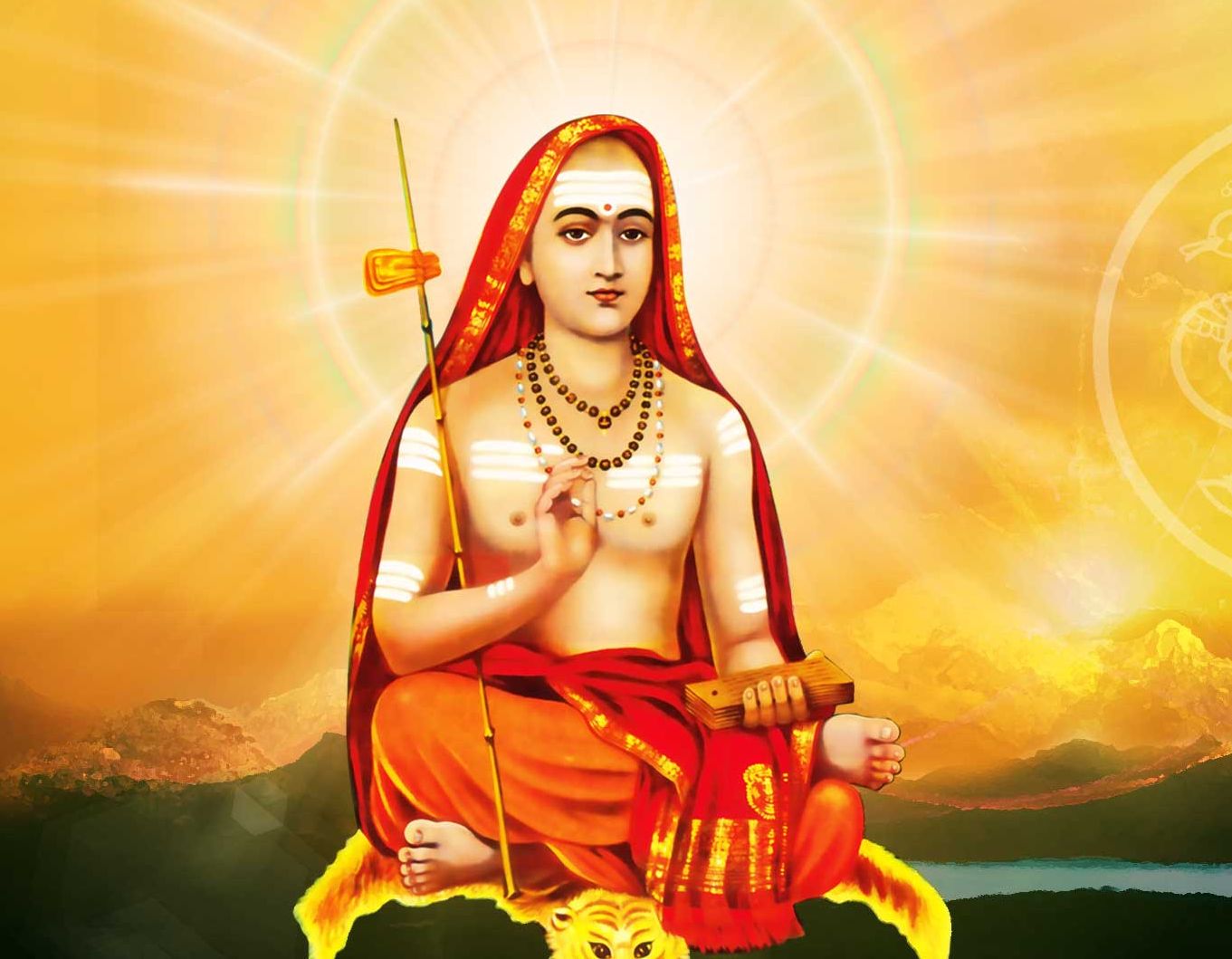
Becoming One with the Infinite: The Essence of Brahman
In the profound words of Adi Shankara, "He who knows Brahman becomes Brahman," we encounter a transformative assertion that speaks to the heart of spiritual realization. This statement encapsulates the essence of Vedanta philosophy, suggesting that true knowledge of the ultimate reality, Brahman, leads to a profound metamorphosis of the self. The stakes are high; this is not merely an intellectual exercise but a call to awaken to the very nature of existence itself, urging us to transcend the limitations of our individual identities.
To know Brahman is to engage in a journey of deep introspection and awakening, where the seeker sheds the layers of ignorance that obscure their true nature. This realization is not a passive acknowledgment but an active becoming, a dynamic process that invites us to embody the essence of the universe. In a world often characterized by separation and duality, Shankara’s words remind us of the inherent unity that lies beneath the surface, urging us to recognize our interconnectedness with all that is.
The image / the metaphor
The imagery within Shankara's quote evokes a powerful sense of transformation. The verb "knows" implies a deep, experiential understanding rather than mere intellectual comprehension. It suggests an intimate relationship with Brahman, where knowledge transcends the confines of thought and enters the realm of being. The phrase "becomes Brahman" further emphasizes this metamorphosis, indicating that the realization of the ultimate reality is not just an external acknowledgment but a profound internal shift that alters one's very essence.
In the speaker's tradition
Adi Shankara's teachings are deeply rooted in the Vedanta tradition, which emphasizes the pursuit of knowledge (jnana) as a means to liberation (moksha). Central to this philosophy is the concept of non-duality (Advaita), which posits that the individual self (Atman) and Brahman are ultimately one. This understanding challenges the conventional notions of separation and duality, inviting practitioners to explore the depths of their own consciousness and recognize the divine essence within themselves and all beings.
In the context of Shankara's work, particularly in the "Vivekachudamani," we find a rich tapestry of ideas that support this transformative journey. The text serves as a guide for seekers, outlining the path to discernment (viveka) and the importance of self-inquiry. By engaging with the teachings of Shankara, one can draw parallels with other spiritual traditions that emphasize the dissolution of the self, such as the concept of sunyata in Buddhism or fana in Sufism, both of which speak to the realization of unity with the divine.
Living the teaching
Consider a modern scenario where an individual grapples with feelings of isolation and disconnection in a fast-paced world. In such moments, the teaching of Shankara can serve as a beacon of hope. By turning inward and engaging in practices such as meditation or self-inquiry, one can begin to peel away the layers of separation that contribute to these feelings. As the individual deepens their understanding of Brahman, they may find that their sense of isolation begins to dissolve, replaced by a profound sense of connection to the universe and all its inhabitants.
In the context of relationships, this teaching can manifest in the way we engage with others. When we recognize that each person is a reflection of the same divine essence, our interactions can shift from a place of judgment and separation to one of compassion and understanding. In difficult moments, such as conflicts or misunderstandings, recalling Shankara's wisdom can encourage us to approach the situation with empathy, recognizing that beneath the surface differences lies a shared humanity and a common spiritual journey.
A reflection
As we contemplate the depth of Shankara's assertion, we are invited to engage with a contemplative question: How can I deepen my understanding of my true nature and recognize the interconnectedness of all beings? This inquiry encourages us to explore the ways in which we can embody the essence of Brahman in our daily lives, fostering a sense of unity and compassion that transcends the boundaries of individuality. In this exploration, we may find that the journey toward becoming Brahman is not only a personal quest but a collective awakening to the divine presence that permeates all existence.






Join the BrightStar Community
Stay connected with daily inspiration, event announcements, and community wisdom