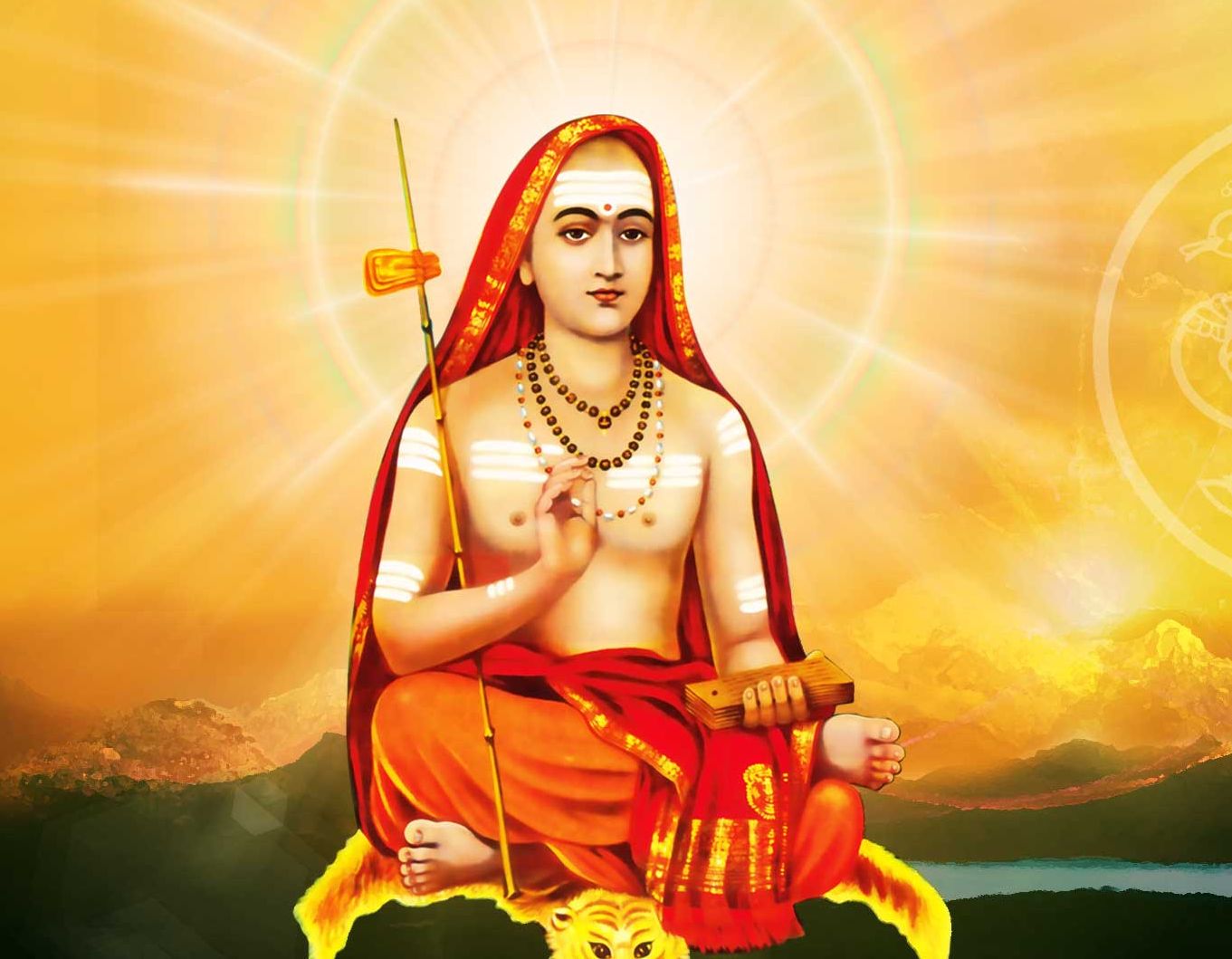
The Infinite Essence of Consciousness
In the profound words of Adi Shankara, "Brahman is consciousness — pure, infinite, eternal," we encounter a declaration that invites us to explore the very fabric of existence. This assertion is not merely philosophical; it serves as a gateway to understanding the nature of reality itself. By identifying Brahman, the ultimate reality in Vedanta, with consciousness, Shankara challenges us to reconsider our perceptions of self and the universe. The stakes are high, for this realization can lead to liberation from the confines of ignorance and suffering.
As we delve deeper into this quote, we recognize that it encapsulates a transformative vision of consciousness that transcends the limitations of individual experience. Shankara's assertion suggests that our true essence is not separate from the divine; rather, it is an integral part of an infinite consciousness that permeates all existence. This understanding compels us to reflect on our relationship with the world around us and the nature of our own awareness. It is a call to awaken to the deeper truths that lie beneath the surface of our everyday lives.
The image / the metaphor
At its core, the quote presents Brahman as synonymous with consciousness, evoking imagery of vastness and depth. The terms "pure," "infinite," and "eternal" conjure a sense of boundless possibility, suggesting that consciousness is not merely a byproduct of the mind but the very essence of reality itself. The choice of the word "is" indicates a profound unity, inviting us to dissolve the barriers between the observer and the observed. This imagery evokes a felt sense of interconnectedness, where the individual self is but a wave in the ocean of consciousness.
Delving deeper into this metaphor, we can see that Shankara's words encourage us to perceive consciousness as a luminous presence that transcends time and space. It is not confined to the fleeting thoughts and emotions that often dominate our awareness; rather, it is the underlying current that sustains all existence. This perspective invites us to experience life not as isolated beings but as expressions of a singular, infinite consciousness. In this light, the journey of self-discovery becomes a return to the source, a recognition of our inherent unity with the cosmos.
In the speaker's tradition
Adi Shankara's teachings are deeply rooted in the Vedantic tradition, which emphasizes the non-dual nature of reality. Concepts such as dharma, the moral order of the universe, and prajna, or wisdom, are integral to understanding how consciousness manifests in our lives. Shankara's philosophy aligns with the notion of kenosis, or self-emptying, where the ego must dissolve to realize the fullness of Brahman. This journey toward self-realization is not merely an intellectual exercise; it is a profound spiritual awakening that invites us to embrace our true nature.
In his text, the *Atma Bodha*, Shankara elaborates on the nature of the self and its relationship to Brahman, emphasizing that ignorance is the root of suffering. The realization that we are not separate from this infinite consciousness is a central theme in Vedanta. This understanding echoes the teachings found in other spiritual traditions, such as the Buddhist concept of sunyata, or emptiness, which also points to the interconnectedness of all beings. Both traditions invite seekers to transcend the illusion of separateness and awaken to the reality of oneness.
Living the teaching
Consider a modern scenario where this teaching can be applied: a moment of frustration in a crowded subway. In such instances, it is easy to feel isolated, overwhelmed by the chaos of the external world. However, if we remember Shankara's insight that Brahman is consciousness, we can shift our perspective. Instead of viewing ourselves as separate entities navigating a chaotic environment, we can recognize that we are all part of a shared consciousness, interconnected in our experiences. This realization can transform our frustration into compassion, allowing us to see others not as obstacles but as fellow travelers on the path of existence.
Another application of this teaching might arise in the context of a difficult relationship. When faced with conflict, it is common to focus on the differences that separate us from others. Yet, by contemplating the idea that we are all expressions of the same infinite consciousness, we can cultivate empathy and understanding. This perspective encourages us to approach conflicts with a sense of curiosity rather than defensiveness, fostering deeper connections and healing. In daily practices such as meditation or mindful breathing, we can also cultivate awareness of this unity, allowing the essence of Brahman to permeate our interactions and relationships.
A reflection
As we contemplate the profound assertion that "Brahman is consciousness — pure, infinite, eternal," we are invited to reflect on our own understanding of self and existence. How often do we perceive ourselves as separate from the world around us? In what ways can we cultivate a deeper awareness of our interconnectedness with all beings? These questions serve as a guiding light on our journey toward self-realization, encouraging us to explore the depths of consciousness and embrace the infinite possibilities that lie within.






Join the BrightStar Community
Stay connected with daily inspiration, event announcements, and community wisdom